
No overhaul required. These are simple, affordable changes that cut waste, lower your bills, and make a real difference starting today.
Introduction
Most zero waste guides start by asking you to reimagine your entire life. This one does not. Every swap on this list can be done within a week, costs less than its conventional counterpart over time, and requires no special skills or equipment.
The zero waste movement can feel intimidating from the outside. Minimalist kitchens, mason jar pantries, and composting systems that require a learning curve. But the reality is that meaningful waste reduction does not need to be all-or-nothing. The ten swaps below are entry points, each one practical, each one with a genuine payoff.
Start with the ones that match how you already live. You do not need to do all ten at once.
By the numbers: Households that complete all ten swaps save an average of $700 or more per year, reduce their plastic waste by around 30 lbs per person annually, and cut their lighting energy costs by up to 75% through the LED switch alone (EPA and IEA, 2025).
Swap 1: Reusable Shopping Bags
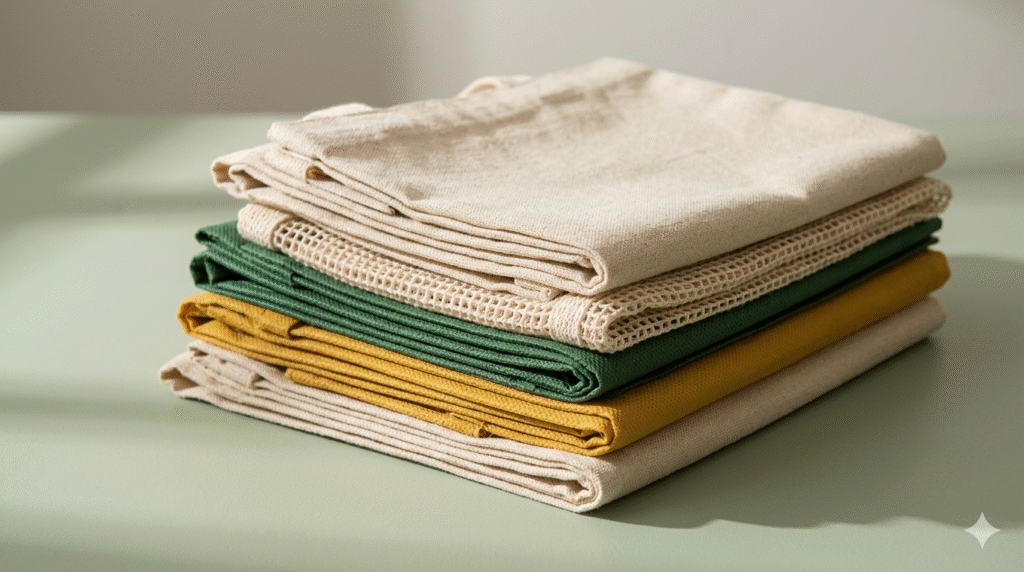
Single-use plastic bags are one of the most visible symbols of disposable culture, and one of the easiest things to eliminate. The average American uses around 365 plastic bags per year. Most are used once for less than 20 minutes, then spend hundreds of years in a landfill or worse, fragment into microplastics in waterways.
Reusable shopping bags made from cotton, jute, or recycled polyester pay for themselves quickly. A set of four to six bags typically costs between $10 and $20 and with regular use will last several years. Keep them in your car, by your front door, or folded inside your regular bag so they are there when you need them. The only reason reusable bags fail is forgetting to bring them.
What to look for: Cotton canvas, ideally 100% organic, machine washable, flat-bottom for grocery stability.
Pro tip: Buy one set for groceries and one compact fold-up style for impulse shopping trips. Keep both in your car.
Swap 2: LED Bulbs

If you still have incandescent bulbs in your home, this is the highest-return swap on this list, and it takes about ten minutes. LED bulbs use up to 80% less energy than incandescents and last 15 to 25 times longer. For a home with 20 light fixtures, switching to LED can save between $150 and $200 per year on electricity bills alone.
Modern LEDs are no longer the harsh, bluish lights they once were. Warm white LEDs (look for 2700K to 3000K on the box) are virtually indistinguishable from incandescents in terms of color quality. Daylight LEDs (5000K to 6500K) work well in home offices and bathrooms where you want clarity and alertness.
What to look for: Energy Star certified, matching wattage equivalent (e.g., 60W equivalent), correct base type (E26 is standard in the US).
Pro tip: Replace the bulbs you use most first. Living room, kitchen, and bedroom fixtures run the longest hours and deliver the fastest payback.
Swap 3: Concentrated or Bar Cleaning Products
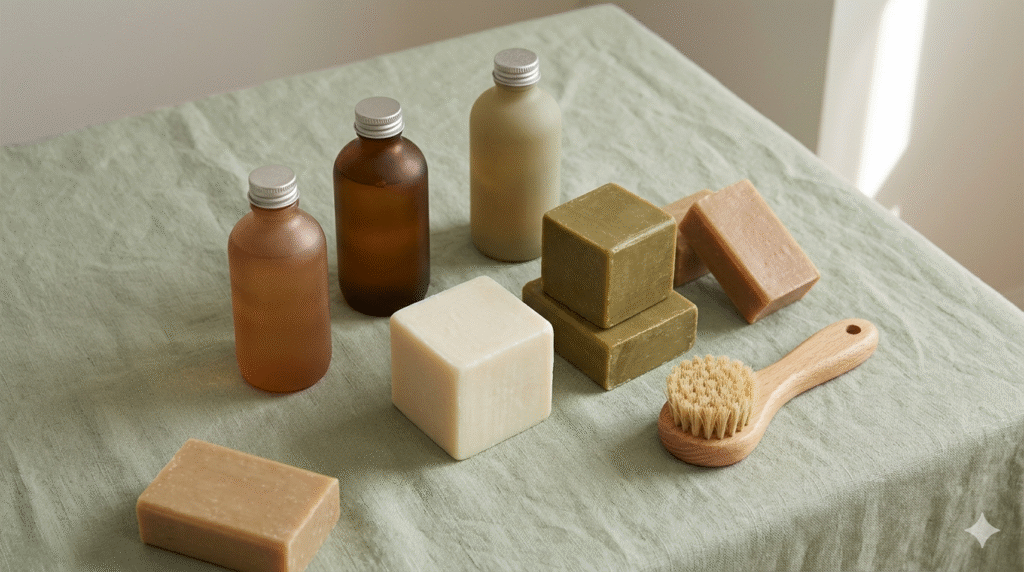
Most conventional cleaning products are 90% water in a single-use plastic bottle. You pay for shipping water, you store water, and then you throw the bottle away. Concentrated cleaning products and bar-format alternatives solve all three problems at once.
Concentrated cleaners come in small pouches or tablets that you mix with water in a reusable bottle at home. A single pouch typically replaces two to four standard bottles of cleaner. Bar dish soap and laundry sheets work on the same principle: no plastic bottle, minimal packaging, and full cleaning effectiveness. Brands like Blueland, Branch Basics, and Meliora have made these formats widely available, but supermarket own-brand concentrates are increasingly common and effective.
“Switching to concentrated cleaning products is one of the fastest ways to cut the number of plastic bottles entering your home. The cleaning performance is equivalent, and the packaging footprint is reduced by 80 to 90 percent.” — Ellen MacArthur Foundation, Rethinking Plastics in Consumer Products, 2024
What to look for: Phosphate-free formula, compostable or minimal packaging, refill availability in your area.
Pro tip: Start with your all-purpose cleaner since it is the highest-volume product in most homes. Then move to dish soap and laundry over the following month.
Swap 4: Reusable Water Bottle
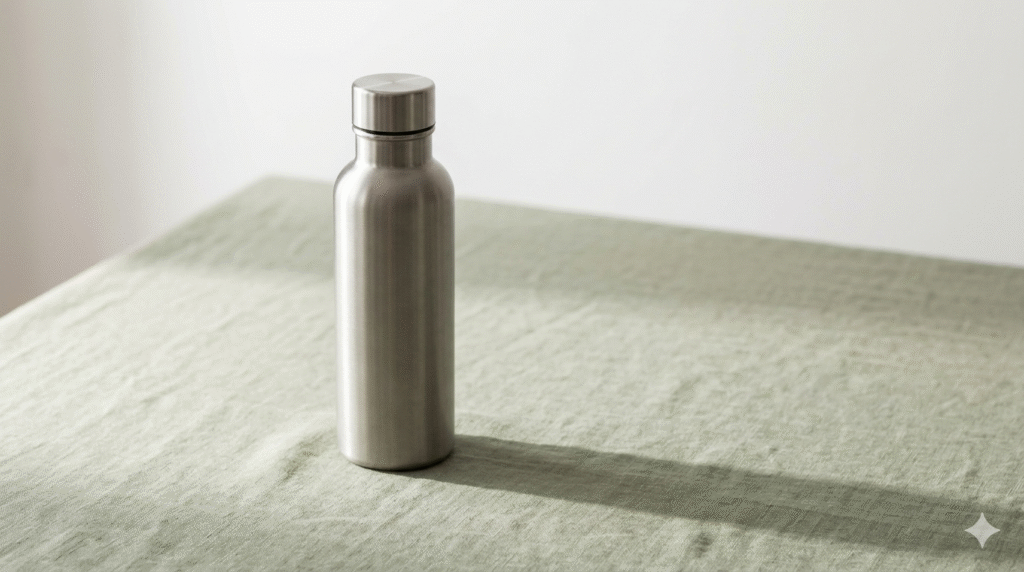
This is the swap most people have already made in some form, but it is worth including because the numbers are striking. The average American buys 156 single-use plastic water bottles per year. At roughly $1 to $2 each, that adds up to $150 to $300 annually for something that tap water delivers for fractions of a cent per liter.
A quality insulated stainless steel bottle costs $20 to $40 and, with reasonable care, lasts a decade. It keeps water cold for 24 hours and hot beverages warm for 12. For people concerned about tap water quality, pairing a reusable bottle with a faucet filter is still dramatically cheaper and less wasteful than buying bottled water.
What to look for: Food-grade stainless steel (18/8), wide mouth for easy cleaning, leak-proof lid, dishwasher-safe.
Pro tip: The bottle you actually carry is better than the perfect bottle sitting at home. Pick one that fits your bag and your lifestyle, not the most impressive spec sheet.
Swap 5: Beeswax or Silicone Food Wraps
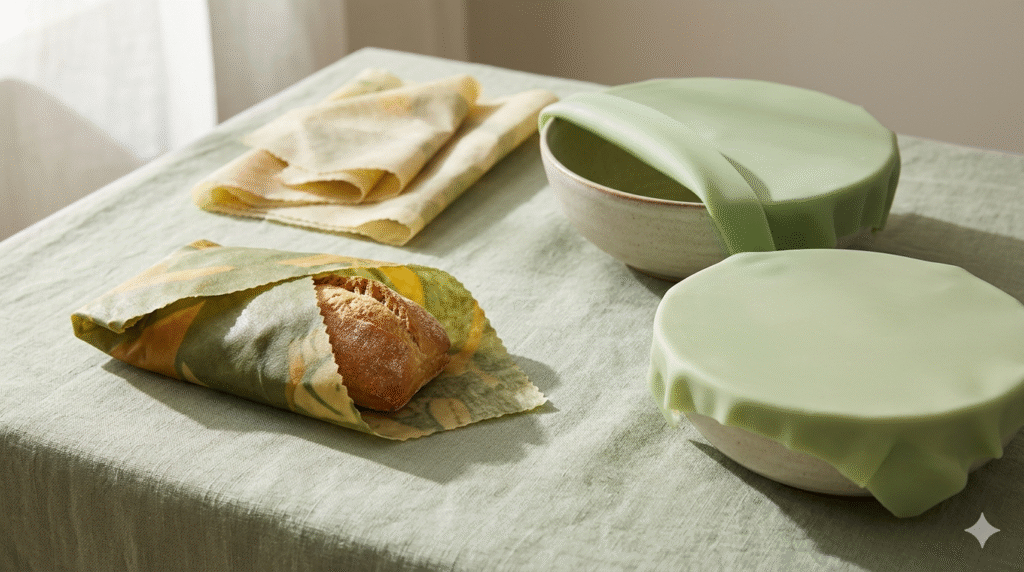
Plastic cling wrap and single-use zip bags are among the hardest plastics to recycle. Most curbside programs do not accept them. They end up in landfills or, frequently, in the environment. Beeswax wraps and silicone stretch lids offer a direct replacement for most food storage uses.
Beeswax wraps are made from cotton infused with beeswax, tree resin, and jojoba oil. They mold around food or bowls using the warmth of your hands, keep produce and cheese fresh, and are washable with cool water and soap. A set of three to four wraps in different sizes handles most household needs and lasts up to a year with regular use. Silicone bags are a better option for freezing and for storing wet or liquid-heavy foods.
What to look for: USDA organic beeswax for beeswax wraps, platinum-grade silicone for silicone bags, multiple size set for versatility.
Pro tip: Beeswax wraps do not work well with raw meat or very hot food. Keep a small roll of unbleached parchment paper for those specific uses.
Swap 6: Cloth Napkins and Cleaning Rags
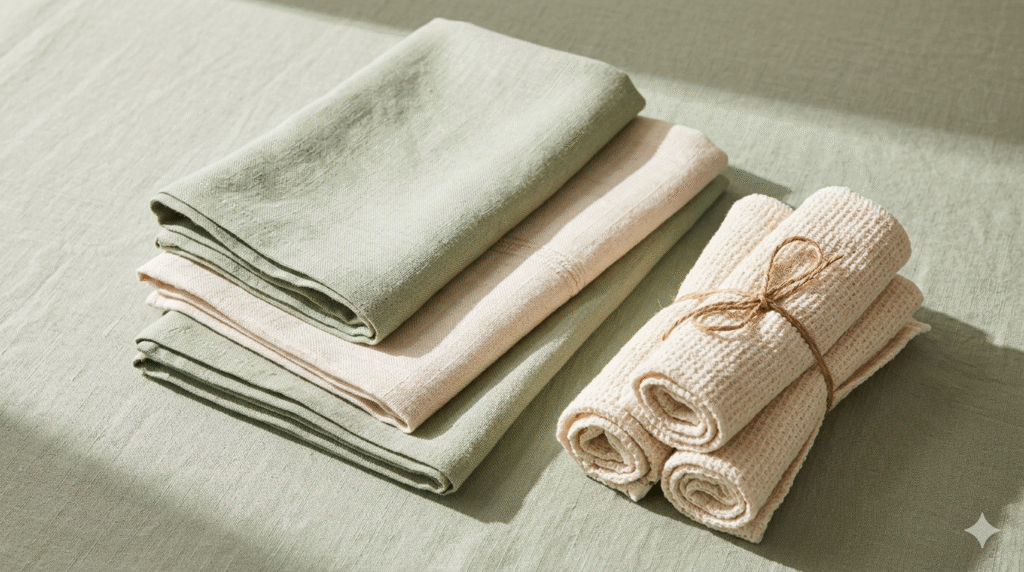
The average American household spends around $180 per year on paper towels. That is money spent on something used once and discarded. Switching to cloth napkins for meals and cotton rags for cleaning costs almost nothing if you repurpose worn-out t-shirts and towels, or a modest amount if you buy a dedicated set.
The transition is easier than most people expect. Keep a small basket near the kitchen for clean cloths and a lidded container for used ones until laundry day. Most cloth napkins and rags can go straight into a regular laundry load. You do not need a dedicated wash cycle.
What to look for: 100% cotton or linen napkins, they soften with washing. Aim for 12 to 24 in your collection to avoid running out between laundry days.
Pro tip: Cut up old cotton t-shirts into squares for kitchen rags. They are absorbent, free, and already broken in.
Swap 7: Bamboo or Recycled-Content Toothbrush
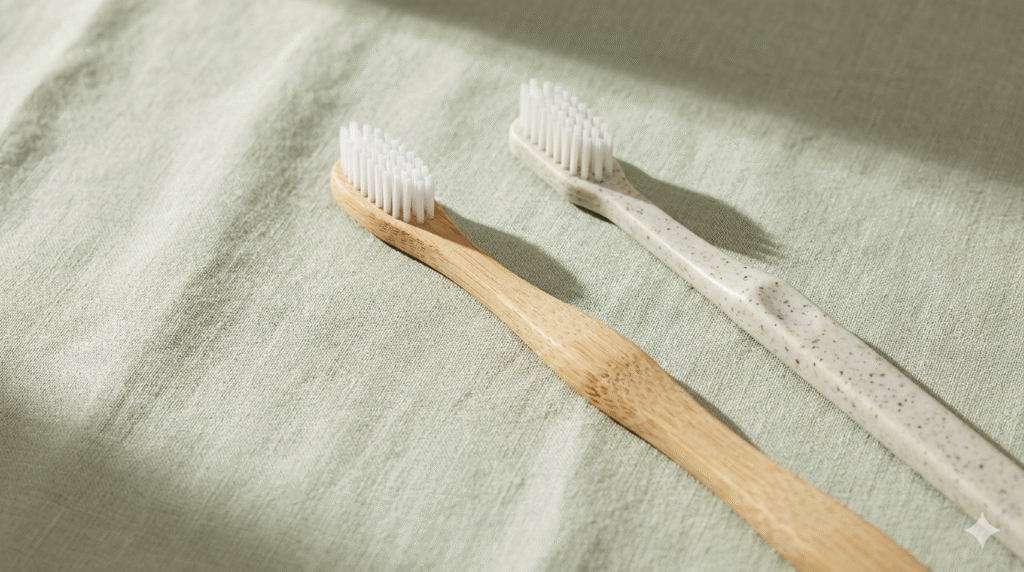
Around 4.7 billion plastic toothbrushes are discarded worldwide every year, and virtually none of them are recyclable through standard programs. They are made from mixed plastics that are difficult to separate and process. Bamboo toothbrushes replace the handle with a compostable or biodegradable material, significantly reducing the plastic content.
Most dentists still recommend nylon bristles for effective cleaning, so a bamboo-handled toothbrush with nylon bristles is the practical middle ground: the bulk of the waste (the handle) is compostable, even if the bristle tuft still needs to go in the trash. Some brands now offer bristles made from plant-based nylon, though the cleaning performance of these varies.
What to look for: BPA-free bristles, sustainably harvested bamboo handle, soft or medium bristle grade as dentists recommend.
Pro tip: Pull the bristles out with pliers before composting the handle. The bristle tuft is small and can go in the trash separately.
Swap 8: Refillable Soap Dispensers
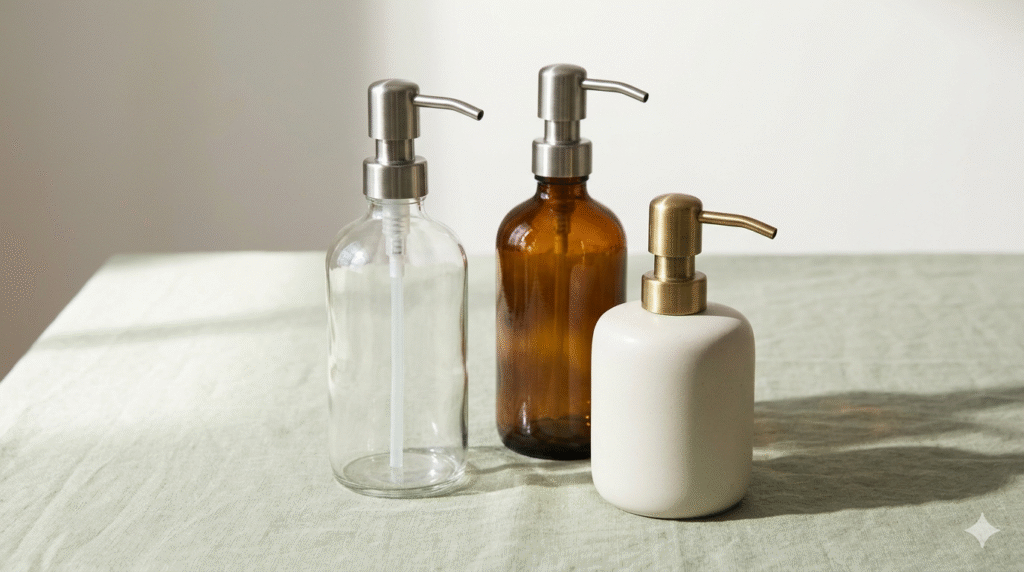
Hand soap and body wash are two of the highest-turnover plastic items in most bathrooms. Switching to a refillable glass or stainless steel dispenser filled from a large-format refill container immediately cuts plastic use by 60 to 80%, since a 1-liter refill bottle replaces five to eight standard 250ml pump bottles.
For an even lower-waste approach, bar soap eliminates the bottle entirely. Modern bar soaps have shed the drying reputation of older formulations. Many are made with moisturizing oils and perform comparably to liquid options for most skin types. Shampoo bars follow the same logic for the shower and have improved dramatically in terms of lather and hair feel over the past three years.
What to look for: Glass or ceramic dispenser, a pump mechanism that does not clog, and refill availability near you.
Pro tip: Buying soap concentrate from a local zero waste store and diluting at home gives you the cheapest per-wash cost and the least packaging waste of any option.
Swap 9: Reusable Coffee Cup or French Press
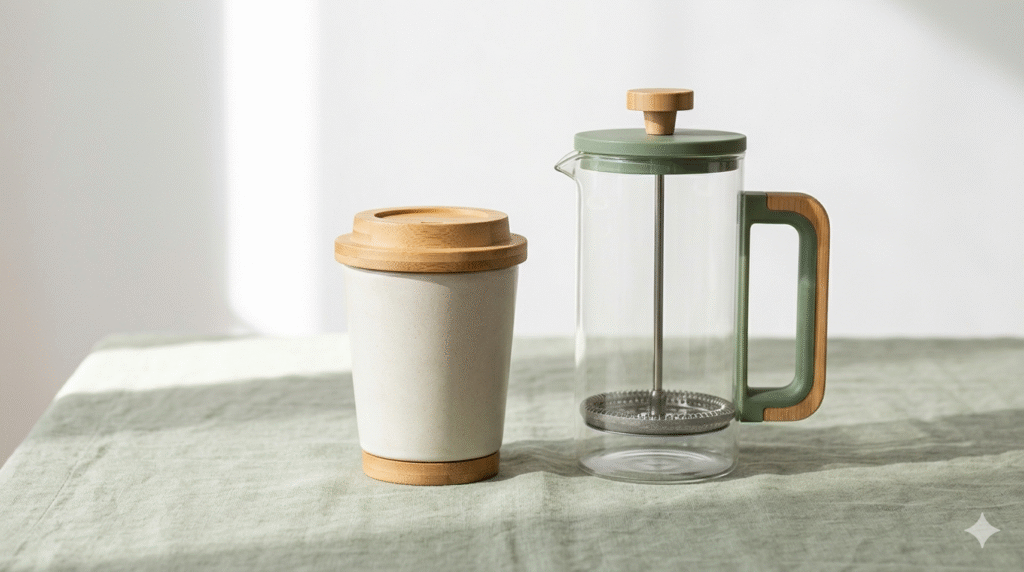
Disposable coffee cups are one of the more insidious waste items because they look recyclable but usually are not. Most are lined with a thin polyethylene film that prevents composting and makes recycling difficult without specialist facilities. The UK alone throws away an estimated 2.5 billion disposable coffee cups per year, the vast majority of which end up in landfill.
A reusable travel cup handles on-the-go coffee. At home, switching from single-serve pod machines to a French press, Moka pot, or drip brewer eliminates both the pod waste and the cost premium. A French press costs $20 to $40, produces no waste beyond the coffee grounds (which can be composted), and makes better coffee than most pod systems by most objective measures.
What to look for: Double-wall insulated stainless steel travel cup, a lid that does not leak, and a capacity that matches your typical order size.
Pro tip: Many cafes now offer a small discount, typically 10 to 50 cents, for bringing your own cup. Over a year of daily coffee, that adds up to $35 to $180 in savings.
Swap 10: Reusable or Compostable Produce Bags
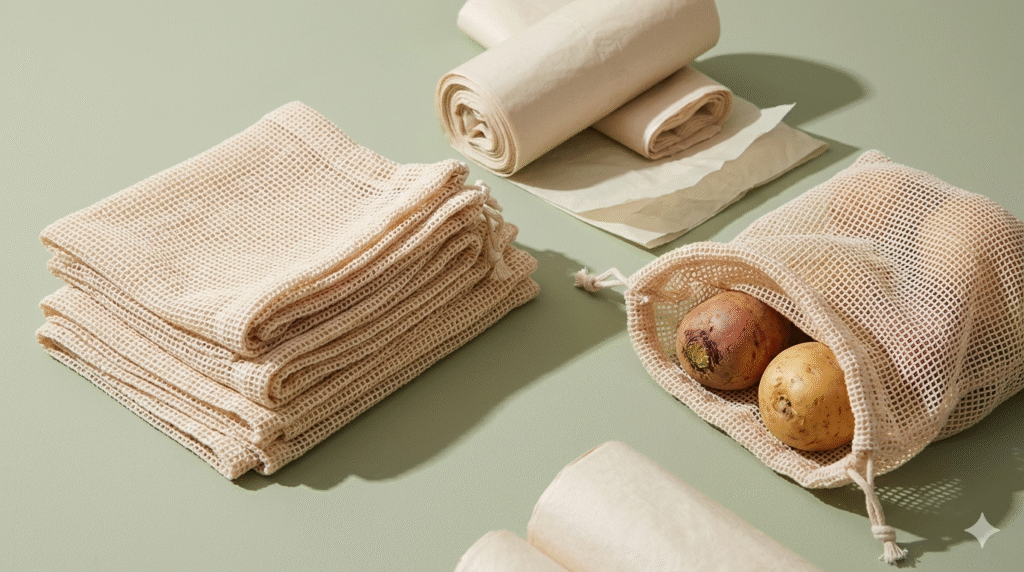
The thin plastic produce bags in supermarket fruit and vegetable sections are almost impossible to recycle through standard curbside programs. Most end up in landfill or waterways. Reusable mesh produce bags solve this problem cleanly. They weigh almost nothing (most scales at checkout do not register the difference), hold all produce types, and are machine washable.
For situations where a bag is genuinely needed and you do not have a reusable one, compostable produce bags certified to EN 13432 or ASTM D6400 standards break down in commercial composting facilities. They are not a perfect solution since most people do not have access to industrial composting, but they are a meaningfully better choice than conventional plastic in those circumstances.
What to look for: Lightweight mesh, drawstring closure, a set of mixed sizes for different produce types.
Pro tip: You do not actually need a bag for most produce. Apples, oranges, avocados, onions, and most root vegetables go straight into your trolley or basket with no bag required.
Your Zero Waste Starter Checklist
Start with three to five. Progress beats perfection every time.
[ ] Buy or locate reusable shopping bags and put them somewhere you will actually remember them.
[ ] Replace the three most-used light fixtures in your home with LED bulbs.
[ ] Order or buy a set of concentrated cleaning product refills.
[ ] Set up a reusable water bottle as your daily carry.
[ ] Replace plastic wrap with beeswax wraps or silicone lids for everyday food storage.
[ ] Cut up an old t-shirt for kitchen rags and move the paper towels out of reach.
[ ] Switch to a bamboo toothbrush at your next replacement.
[ ] Set up a refillable soap dispenser in the bathroom and kitchen.
[ ] Bring a reusable cup to your next coffee shop visit.
[ ] Add mesh produce bags to your grocery kit.
Frequently Asked Questions
All cost and savings figures are sourced from EPA, IEA, and independent consumer research published between 2024 and 2026. We do not accept payment from brands for inclusion in our articles.