

A new survey found that 78% of consumers say environmental sustainability is important to them and that they want to lead more sustainable lives. Yet most of them also admit they are not sure which brands actually deserve their trust. That gap is not a coincidence. It exists because the word “eco-friendly” is unregulated, overused, and almost meaningless without verification behind it.
This article cuts through that noise. It explains exactly what makes a brand genuinely sustainable in 2026, lays out how we evaluated every brand on this list, and gives you a practical framework for making your own brand assessment in under five minutes.
No sponsored inclusions. No vague claims. Just a straight answer to a question that matters.
What Makes a Brand Eco-Friendly in 2026
A brand is genuinely eco-friendly in 2026 when its environmental claims are verified by credible third parties, backed by measurable data, and applied across its full supply chain rather than a single product or marketing campaign.
That definition matters because any company can print “eco-friendly” on its packaging without meeting any standard of proof. The distinction between a brand that earns the label and one that wears it for marketing purposes comes down to four things: verification, scope, transparency, and accountability.
The Four Pillars of a Genuinely Eco-Friendly Brand

1. Third-Party Certification
The brand holds at least one credible independent certification relevant to its primary product category. For consumer goods companies, B Corp certification from B Lab is the most comprehensive company-level standard available. It requires a minimum verified score across governance, workers, community, environment, and customers. Category-specific certifications include GOTS for textiles, FSC for paper and wood products, and Cradle to Cradle for product lifecycle design.
A brand that only displays self-issued badges or vague claims like “eco-conscious” or “planet-friendly” has not cleared this bar.
2. Supply Chain Scope
Genuine sustainability does not stop at the factory gate. Brands that score well on environmental metrics typically disclose Scope 1, 2, and 3 emissions, meaning they account for their own operations, the energy they purchase, and the upstream and downstream emissions generated by their suppliers and customers. Brands that report only Scope 1 emissions, or none at all, are showing you part of the picture.
3. Measurable Targets With Deadlines
Commitments without timelines are aspirations, not accountability. Look for brands that have submitted targets to the Science Based Targets initiative (SBTi), which requires companies to align their emission reduction goals with the 1.5-degree pathway under the Paris Agreement. As of 2025, over 7,000 companies globally have committed to or received approval for SBTi targets. A brand that has not engaged with any external standard for its climate commitments deserves scrutiny.
4. Public Progress Reporting
A brand that publishes an annual sustainability or impact report with year-over-year data, including areas where performance declined, is demonstrating a level of accountability that marketing copy cannot replicate. The Carbon Disclosure Project (CDP) maintains public scores for thousands of companies. Searching a brand name on cdp.net takes under a minute and gives you a standardized view of how seriously the company takes environmental disclosure.
Why the 78% Statistic Matters Here
When the vast majority of consumers say sustainability matters to them, brands face pressure to appear sustainable whether or not they have done the work. That pressure is precisely what drives greenwashing. Understanding what genuine eco-friendliness looks like in practice is the most effective defense a consumer has.
How We Evaluated the Brands on This List
Every brand included here was assessed against the same four-pillar framework above. To be included, a brand needed to meet at least three of the four criteria, with third-party certification being non-negotiable.
We excluded brands that:
– Rely entirely on self-reported sustainability claims with no external verification
– Hold certifications that have lapsed or are under active review
– Have faced substantiated greenwashing findings from regulators in the EU, US, or UK in the past two years
– Market a single sustainable product line while the rest of the business operates without environmental accountability
This list is not exhaustive, and it is not a ranking. It is a starting point for consumers who want to spend money with companies whose practices align with their values.
Best Eco-Friendly Brands by Category in 2026
Home Cleaning
Blueland makes dissolvable cleaning tablets that ship in paper packaging and activate in reusable bottles at home. It holds B Corp certification and publishes lifecycle assessment data for its core products. One Blueland starter kit replaces an estimated 100 single-use plastic bottles over its lifetime.
Branch Basics produces a plant-based concentrated cleaner that dilutes into multiple product formats from a single bottle. It is free from synthetic fragrances, dyes, and preservatives, and holds certification from Made Safe, which screens for over 6,500 known or suspected harmful chemicals.
Meliora is a small-batch, Chicago-based cleaning brand certified by both B Lab and Made Safe. It uses minimal packaging, sources ingredients domestically where possible, and publishes its full ingredient list with sourcing notes for every product.

Personal Care and Beauty
Ethique produces solid bar products across shampoo, conditioner, body wash, and skincare, eliminating plastic bottles entirely. It is certified B Corp and carbon neutral, and offsets residual emissions under the Gold Standard framework. Since its founding, Ethique estimates it has prevented over 50 million plastic bottles from entering the waste stream.
Attitude is a Canadian personal care brand certified by EWG (Environmental Working Group) and B Corp. It uses biosourced and naturally derived ingredients, ships in recycled packaging, and has expanded its refillable personal care line significantly since 2023.
Plaine Products offers shampoo, conditioner, and body wash in aluminum bottles on a refill-by-mail model. Customers return empty bottles, which are sanitized and refilled rather than recycled. It is a direct circular economy model applied to personal care at a consumer level.

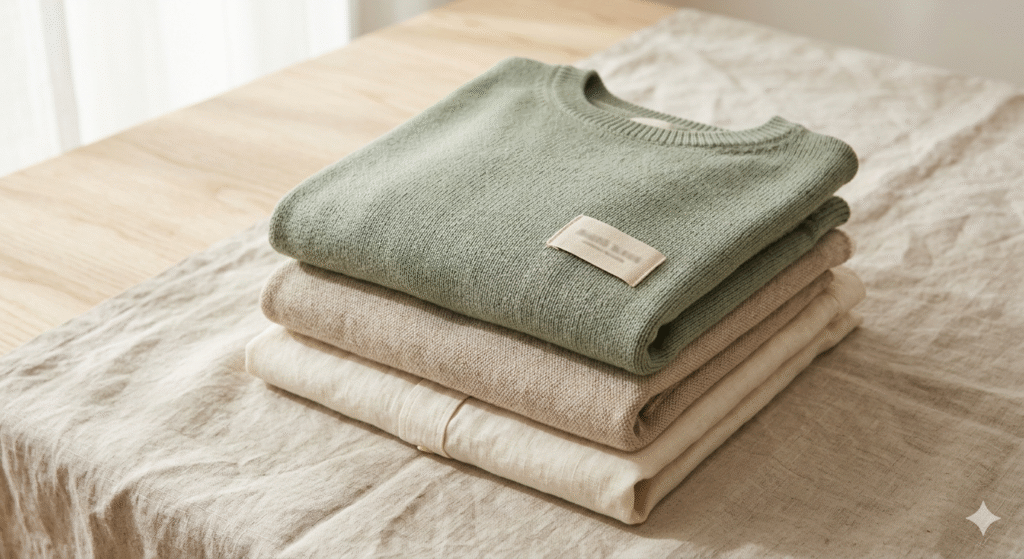
Clothing and Textiles
Patagonia has held B Corp status since 2011 and uses recycled and organic materials across its primary product lines. It operates a repair and resale program (Worn Wear) that directly extends product life, and in 2022 transferred company ownership to a trust structure that directs profits toward environmental causes. Its supply chain transparency reporting is among the most detailed in the apparel industry.
Thought Clothing is a UK-based brand specializing in natural and sustainable fiber clothing, including organic cotton, bamboo, hemp, and recycled materials. It is certified B Corp and a member of the Better Cotton Initiative. Its fabrics are GOTS certified at the yarn stage.
Pact Apparel uses organic cotton certified to GOTS standards and manufactures in Fair Trade certified factories. It publishes factory names and locations on its website, a level of supply chain transparency that remains uncommon in the mid-price apparel segment.
Food and Kitchen
Alter Eco produces organic chocolate and grain products using regenerative agriculture sourcing. It is certified B Corp, Fair Trade, and carbon neutral, and works directly with farming cooperatives in Ecuador, Peru, and Burkina Faso under long-term partnership models rather than commodity market pricing.
Package Free Shop is a zero waste retail platform that curates products based on packaging reduction criteria. It does not manufacture its own goods but applies a consistent sourcing standard across its catalog and publishes the environmental rationale for each product it stocks.
Earthly Choice offers plant-based grains and seeds with organic certification. It partners with Canadian and US farms using regenerative practices and publishes sourcing information by product line.
Home and Living
Pela produces phone cases, AirPod cases, and home accessories from Flaxstic, a proprietary material made from flax shive and biopolymers. Its products are certified compostable under ASTM D6400. It is certified B Corp and offers a take-back program for end-of-life products.
Public Goods is a membership-based sustainable home goods brand offering cleaning, personal care, pantry, and pet products. It holds B Corp certification, uses recycled and minimal packaging across its catalog, and formulates products without synthetic fragrances or parabens.
Grove Collaborative is an online retailer of natural home and personal care products. It holds B Corp certification and has committed to being 100% plastic-free across its own-brand products. It also offers a plastic offset program for third-party brands sold through its platform.
Baby and Family
Dyper produces bamboo-based diapers with no chlorine bleaching, fragrance, or latex. It partners with a commercial composting service (Redyper) that picks up used diapers and processes them through industrial composting rather than landfill. It is certified B Corp.
Bambo Nature is a Danish baby care brand with the Nordic Swan Ecolabel and EU Ecolabel certifications. Its diapers and wipes are produced without harmful chemicals and meet the OEKO-TEX Standard 100 for skin safety.
Brands That Have Improved the Most Since 2023
Progress matters as much as current standing. These brands have made verifiable improvements in their environmental performance over the past two years.
Dr. Bronner’s completed its B Corp recertification in 2024 with a significantly improved score, reflecting expanded fair trade sourcing and a switch to 100% post-consumer recycled plastic in its liquid soap bottles.
Seventh Generation strengthened its ingredient transparency policy in 2023 and moved its entire laundry line to plant-based formulations verified by the EPA’s Safer Choice program. It has also committed to SBTi targets for 2030.
ILIA Beauty achieved B Corp certification in 2024 after a two-year application process. It reformulated several legacy products to remove ingredients flagged by the EU Cosmetics Directive and increased its use of post-consumer recycled packaging across its core makeup range.
Brands to Watch in 2026
These brands are newer or smaller but have demonstrated a level of transparency and structural commitment that warrants attention.
Kala is a startup producing laundry detergent sheets with zero plastic packaging and a carbon-negative shipping model. It is in the process of B Corp application and publishes quarterly impact updates on its website.
Seed Phytonutrients offers hair and body care in shower-safe paper packaging with seed-embedded labels that can be planted after use. It is a subsidiary of L’Oreal but operates with independent sourcing and formulation standards, a structure that raises legitimate questions about parent company accountability worth monitoring.
Terracycle’s Loop platform continues to expand its reusable packaging retail model, now available through major grocery partners in the US and Europe. It is not a brand in the traditional sense but a system that deserves inclusion for its structural approach to eliminating single-use packaging at scale.
Red Flags: How to Spot a Brand That Is Greenwashing
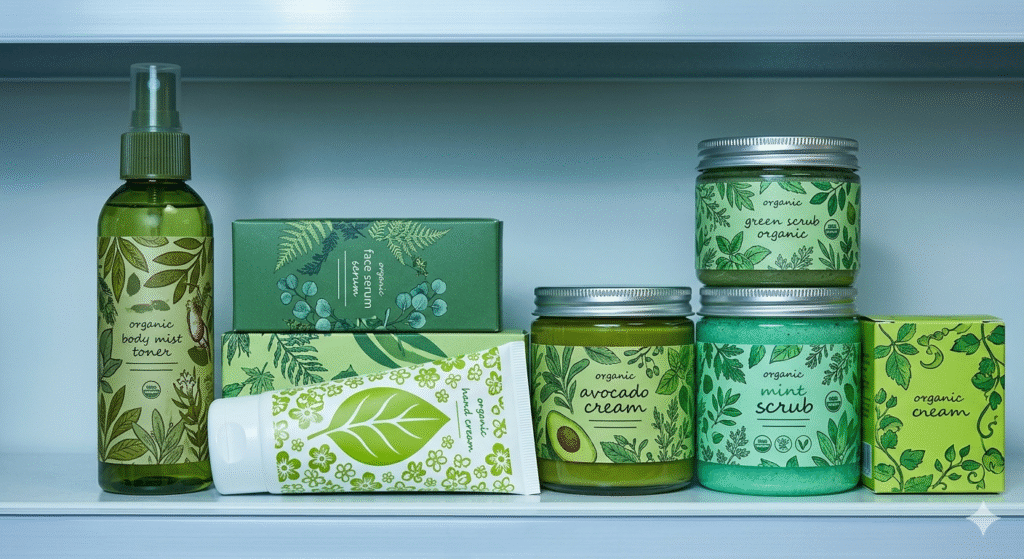
Greenwashing is not always a deliberate lie. More often it is a careful selection of truths designed to crowd out the rest of the picture. Here is what to watch for.
1. Vague language with no specifics. “Green,” “natural,” “clean,” and “conscious” are not claims. Any genuine eco-attribute should be quantifiable or certifiable.
2. Single-attribute marketing that ignores trade-offs. A brand that leads with recyclable packaging while its manufacturing process is energy-intensive or its labor practices are unverified is hiding information, not sharing it.
3. Irrelevant claims. “CFC-free” on products in categories where CFCs have been legally banned for decades is a classic example. Technically true. Completely meaningless.
4. Self-certified labels. If the certification logo on the packaging does not correspond to a real third-party body you can look up independently, treat it as decoration.
5. Visual greenwashing. Green packaging, leaf imagery, and earth tones signal nothing about environmental performance. They are aesthetic choices designed to trigger an association.
6. No supply chain disclosure. A brand that cannot or will not tell you where its materials come from, who made its products, or what its manufacturing footprint looks like does not have good answers to those questions.
How to Evaluate Any Brand in Under 5 Minutes

You do not need to be an environmental scientist to make an informed judgment. These four steps work for almost any consumer brand.
Step 1: Look up the brand on B Lab’s directory at bcorporation.net. If it is certified, you can see its score breakdown. If it is not certified, note whether it has submitted for certification or is a member of any equivalent body.
Step 2: Search the brand name on cdp.net. If it appears and has a score of B or above, it is disclosing emissions data at a meaningful level. If it does not appear at all, it is not participating in the most widely used environmental disclosure framework in the world.
Step 3: Search the brand name plus the word “greenwashing” in a standard web search. Regulatory findings, investigative journalism, and consumer advocacy reports surface this way. If nothing comes up, that is a reasonable positive signal. If substantiated findings appear, read them before buying.
Step 4: Find the brand’s sustainability report, not its homepage or its Instagram. A real sustainability report includes numbers, year-over-year comparisons, third-party audits, and targets with deadlines. A document that is mostly photography and aspiration language is not a sustainability report.
The Bottom Line
In 2026, the gap between brands that are genuinely sustainable and brands that appear sustainable has never been easier to assess, and never been more important to close. The tools are publicly available, the certifications are independently verified, and the brands doing the real work are willing to show you their data. The ones that are not are counting on you not to look. The four-pillar framework in this article, verification, supply chain scope, measurable targets, and public reporting, gives you everything you need to tell the difference in under five minutes.

Sources and Further Reading
– B Lab Global: bcorporation.net
– Carbon Disclosure Project: cdp.net
– Science Based Targets initiative: sciencebasedtargets.org
– Forest Stewardship Council: fsc.org
– Global Organic Textile Standard: global-standard.org
– EPA Safer Choice Program: epa.gov/saferchoice
– EU Ecolabel: ec.europa.eu/ecolabel
– GreenPrint Consumer Survey, 2025
– Ellen MacArthur Foundation, Rethinking Plastics in Consumer Products, 2024